The psychology of architecture looks at how spaces affect our feelings and behaviour. The design of a space can change our mood. It can also affect our focus and how we interact with others.
Environmental psychology is the bigger field behind all this. It’s about the relationship between people and the places they use.
Architects make many choices when designing a space. There is no one-size-fits-all design. So, what do architects need to think about? Let’s take a closer look.
What is the psychology of architecture? Why is it important?
The psychology of architecture studies how people feel in buildings. It builds on environmental psychology. It counts on human-centred design. These fields study how spaces shape daily life. Architects use it to make spaces comfortable. They design for focus, movement, privacy, and connection. This approach drives smarter design choices.
How does architecture influence everyday behaviour?
Buildings guide people without them noticing:
- Movement — clear pathways reduce confusion.
- Interaction — shared spaces encourage conversation.
- Privacy — quiet corners support focus.
- Attention — fewer distractions aid concentration.
- Safety — clear sightlines build comfort.
How is architectural psychology different from basic visual style?
Good architecture goes beyond looks. Architects balance:
| Factor | What it means |
| Function | Does space work? |
| User needs | Does it fit its users? |
| Accessibility | Can everyone move through it? |
| Context | Does it fit its climate and culture? |
| Experience | How does it feel inside? |
How do light, colour, and nature affect your day?
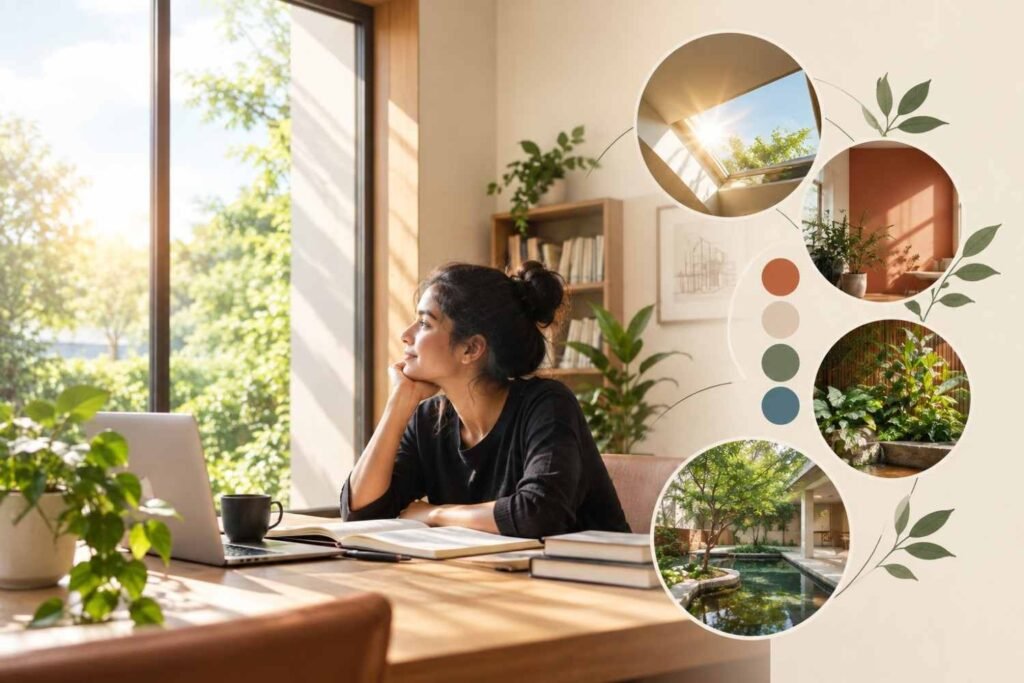
Light, color, and nature instantly change the feel of a room. Daylight can support visual comfort and steady routines. Good paint, plants, and fresh air boost your mood and energy. However, your reaction depends on your taste, your task, and the weather.
Why does natural light matter so much in building design?
Natural light does more than reduce electricity use. It can reduce eye strain, improve alertness, and help support a regular daily routine. Daylight also connects you to nature. It doesn’t cure anything alone — it just removes one source of discomfort.
What about color?
Warm colors make rooms feel exciting, and cool colors make them feel peaceful. Still, everyone is different, and using too much of any color can ruin the mood.
How does biophilic design bring nature indoors?
Biophilic design brings plants, wood, stone, water, and fresh air inside. In Kerala, traditional open courtyards bring in nature every day.
To see real examples, read our simple guide on how campus architecture shapes learning and well-being.
How does interior space planning affect people?
Interior space planning affects how people move, work, and interact. It decides how they find privacy indoors. A good layout makes it easier to move around. It gives people enough personal space. Poor layouts can cause crowding and noise. It demands unnecessary movement.
How do open and enclosed spaces affect behaviour?
Different layouts support different needs:
| Layout type | Best supports |
| Open areas | Teamwork and interaction |
| Enclosed rooms | Focus and privacy |
| Semi-private spaces | Small-group work |
| Flexible spaces | Changing needs |
No single layout suits every activity. Architects choose and combine different spaces based on their usage.
Why is privacy important in architectural design?
Privacy gives people a quiet place to focus and relax. It facilitates private conversations. Good interior space planning balances shared and quiet areas.
Why does accessibility belong in human-centred architecture?
Accessible design makes buildings safe and easy to use for everyone. It supports independence and dignity. It is an important part of human-centered design. Learn more about inclusive and accessible architecture.
How can architecture support focus, learning, productivity and well-being?
Architecture matches spaces to real activities. As a result, it supports focus, learning, and productivity. Many things play a part in this. These include daylight, acoustics, layout, ventilation, and access to nature. However, users and settings still affect the outcome.
What can students learn from classroom and studio design?
Classrooms and studios teach lessons in interior space planning long before graduation. Look for:
- Flexible learning areas
- Strong natural light
- Good ventilation
- Spaces for teamwork
- Quiet corners for solo study
What can workplace design teach future architects?
Offices reveal the tension between focus and teamwork. Architects study how noise, privacy, and layout affect efficiency. Small design shifts can ease that tension.
Why do acoustics and ergonomics matter?
Sound and comfort shape experience as much as sight. A beautiful room with poor acoustics still feels stressful. Ergonomic furniture supports the body through long working hours.
Why should architecture students learn to design around human behavior?
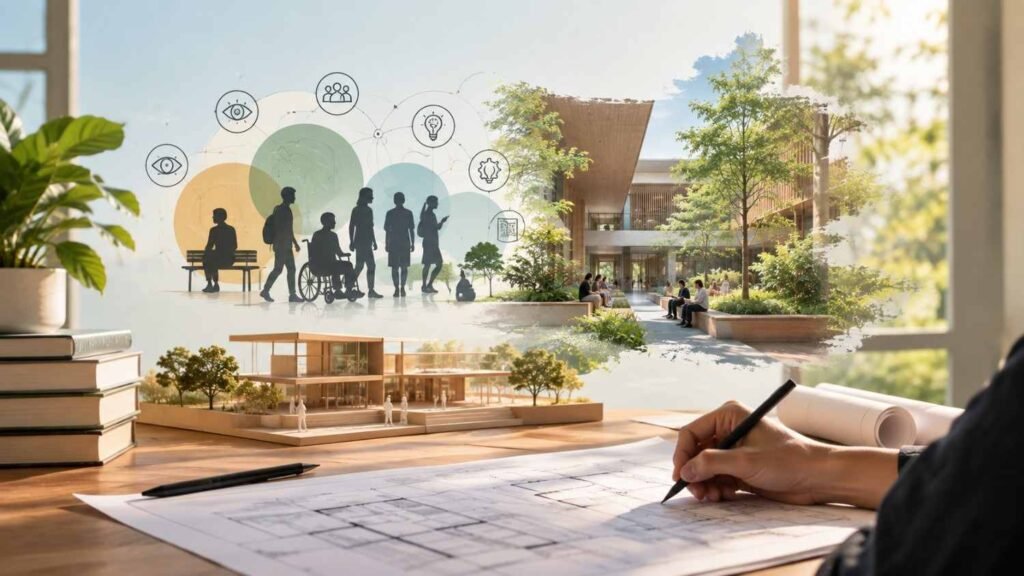
Architecture students must understand how people live and act. Buildings are built for people. Learning the psychology of architecture helps young designers. It shows them how people move through rooms. This knowledge helps them build comfortable, useful spaces.
What skills do future architects develop?
- Observation
- User research
- Spatial reasoning
- Problem-solving
- Design thinking
- Technical coordination
How does human-centred design shape architectural practice?
Human-centered design puts people first. It looks at what people need to feel comfortable. It also respects local culture and nature.
Even new students ask basic questions when planning a small reading spot: Who is this for? What do they need? These simple questions shape great building design.
Curious where this thinking leads? Read about why architecture is a meaningful career choice for a broader view of the field.
Frequently Asked Questions
- What is the psychology of architecture?
The psychology of architecture looks at how buildings can affect our feelings, thoughts, and actions. It also looks at how spaces shape the way we move and interact with others.
- How does psychology of architecture influence office productivity?
A well-planned office can make work easier and more comfortable. Good lighting, less noise, simple desk layouts, and comfortable chairs can help people stay focused.
- How does environmental psychology relate to architecture?
Environmental psychology looks at how people respond to the spaces around them. Architects can use these ideas to create spaces that support comfort, focus, and well-being.
- Why should architecture students study human behaviour?
Buildings are made for people, so architects need to understand how people use them. This helps architecture students design spaces that are safe, comfortable, and easy to use.
Key Takeaways & Your Next Step
- The psychology of architecture connects buildings with human experience.
- Light, colour, nature, acoustics, and layout can shape how people feel and act.
- Human-centered design considers comfort, access, culture, and sustainability together.
- Different buildings need different psychological and spatial choices.
- Architecture students can apply these ideas to design more purposeful spaces.
Great architecture starts with understanding people. Future architects need creative skills. They also need to understand people, materials, and technology. To see how this training comes together, explore TKMSA’s approach to architecture education.
Explore the B.Arch programme at TKM School of Architecture. Learn how to turn human-centred and sustainable design ideas into practical skills. Ready to start? Explore B.Arch admission at TKMSA today.