Sustainable architecture helps future architects design buildings that use fewer resources. These buildings respond to climate. They also connect with smarter city systems. Smart cities need more than sensors and data. They need climate-responsive, resource-efficient design.
Cities are growing fast. Climate pressures keep rising. Technology is changing how architects work. The architect’s role is shifting too. This post covers four areas: design strategies, adaptive reuse, digital tools, and future-ready skills.
How does sustainable architecture shape smart cities?
Sustainable architecture shapes smart cities by cutting building energy and resource demands. It links buildings to transport, digital infrastructure, water systems, and public spaces. Architects now work across environmental, technological, and urban systems. They don’t treat buildings as isolated boxes anymore.
What connects sustainable buildings with smart infrastructure?
A smart building rarely stands alone. It works with several city layers at once:
- Energy-efficient buildings that cut power waste
- IoT and connected building systems for real-time control
- Water and waste management tied to city networks
- Smart mobility and public-space planning
- Human-centred urban design that puts people first
Why does building renovation matter in sustainable cities?
Not every solution needs new construction. Building renovation upgrades existing structures for better performance. It saves materials and cuts construction waste. The reuse of buildings keeps old structures useful for years to come.
To learn more about passive strategies that reduce a building’s climate load, check out our guide onClimate-Responsive Architecture.
Which design strategies make buildings more climate resilient?
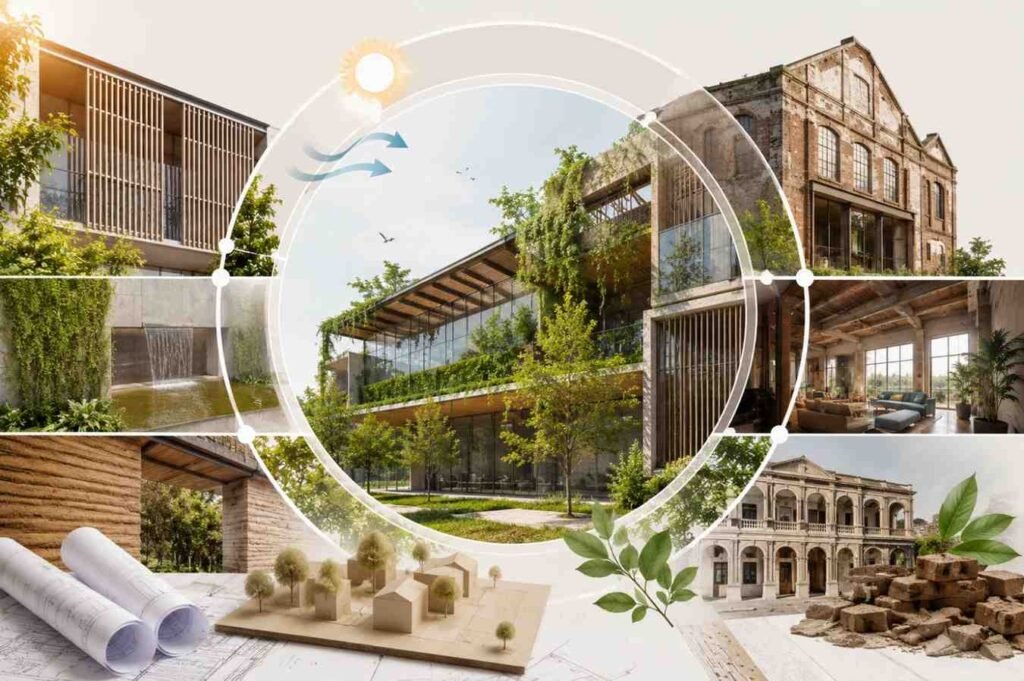
The strongest climate-resilient approach combines bioclimatic design strategies, adaptive reuse architecture, efficient systems, and smart material choices. Architects can shrink environmental impact by first improving sunlight, airflow, and water response. Technology comes after, not before.
How do bioclimatic design strategies reduce building demand?
Good design starts with nature, not machines. Architects study the site first. Then they apply proven passive methods:
- Building orientation that follows the sun’s path
- Natural ventilation for airflow without machines
- Solar shading to block unwanted heat
- Thermal mass that stores and releases warmth slowly
- Daylighting to reduce electric lighting needs
- Passive cooling suited to local weather
- Local climate response built into every layout
Why is adaptive reuse important for sustainable architecture?
Adaptive reuse architecture gives old buildings a new life. It stretches a structure’s useful years far beyond its first purpose. Fewer demolitions mean less waste and lower material demand. An old warehouse can become a studio. A mill can become housing. Adaptive reuse ties sustainability directly to urban renewal.
What is the difference between adaptive reuse, restoration, and renovation?
These terms often get mixed up. Each one plays a different role in sustainable practice.
| Approach | Primary Purpose | Sustainability Contribution | Typical Application |
| Adaptive reuse | Give a building a new function | Extends building life | Industrial or commercial conversion |
| Building renovation | Improve an existing building | Boosts performance | Energy and comfort upgrades |
| Architectural restoration | Preserve original character | Protects embodied value | Historic structures |
| Heritage conservation | Protect cultural significance | Preserves cultural and physical assets | Heritage precincts |
Heritage conservation shows that sustainability isn’t only technical. It also protects culture and memory.
What skills do future architects need for smart cities?
Future architects need environmental design knowledge, digital skills, and adaptive reuse expertise. They also need urban systems thinking. Technology won’t replace design judgment. It should support it instead.
Which technical skills should architecture students develop?
A well-rounded architect blends old fundamentals with new tools:
- Climate-responsive and bioclimatic design
- Energy-performance analysis
- BIM and digital modelling
- AI-assisted architectural workflows
- Building Energy Management Systems (BEMS)
- Adaptive reuse and renovation strategies
- Urban resilience and systems thinking
For a deeper dive into digital modelling tools that simulate energy performance, see ourBuilding Information Modeling (BIM) Courses.
As we explained in our piece on emerging design tools, generative software is reshaping early-stage planning. Explore how these tools are used inArtificial Intelligence in Architecture.
Priya’s story: During her third year, Priya redesigned a crumbling textile mill for a studio project. She measured sunlight angles by hand first. Then she ran an energy model in BIM software. The mill “came alive” on paper, she said, once old brick met new data. That project became her portfolio centrepiece.
How can architects connect buildings with resilient urban infrastructure?
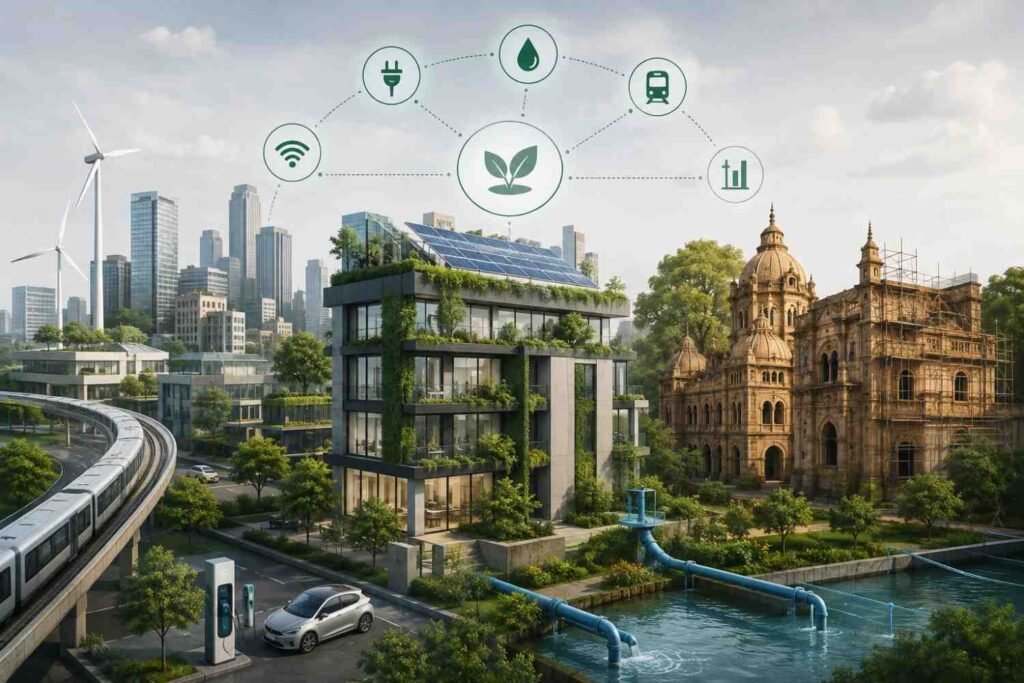 Architects link buildings to resilient cities by weighing energy, water, mobility, and climate risk together. Sustainable architecture stretches past the building envelope. It supports connected neighbourhoods and climate-resilient urban infrastructure.
How do smart building systems support urban resilience?
Buildings that “talk” to city networks perform better under stress:
- BEMS that track energy use in real time
- Sensors and monitoring for early fault detection
- Energy optimization across connected structures
- Water management linked to city supply
- Connected infrastructure that shares live data
- Data-informed decisions on building performance
Why should heritage and existing buildings remain part of smart-city planning?
Old buildings carry embodied energy and cultural weight. Architectural restoration and heritage conservation protect both. Combined with adaptive reuse, they cut resource use while keeping cultural identity intact. Heritage precincts can still power urban regeneration.
For a real-world example of this approach in practice, browse our list ofTop 10 Sustainable Architecture Firms in India.
You might also like our forecast on where the profession is headed:Future of Architecture in India: What You Can Expect.
Frequently Asked Questions
- What is the role of future architects in sustainable architecture and smart cities?
Future architects combine sustainable design, climate resilience, adaptive reuse, digital tools, and smart building systems. Together, these create efficient, connected, human-centred urban environments.
- How can future architects use adaptive reuse to support smart cities?
Architects can modify existing structures for new purposes through adaptive reuse. It supports resource efficiency, urban regeneration, and preservation while cutting unnecessary redevelopment.
- How do building energy management systems support sustainable architecture?
Energy use is tracked and optimized via building energy management systems. They help architects integrate buildings with smarter urban energy networks.
- What skills should architecture students learn for sustainable smart cities?
Students should build skills in climate-responsive design, BIM, AI, energy analysis, adaptive reuse, BEMS, and urban resilience.
Key Takeaways & Call-to-Action
- Sustainable architecture connects buildings with resilient urban systems.
- Bioclimatic design strategies cut environmental demand before technology gets added.
- Adaptive reuse, renovation, restoration, and heritage conservation extend a building’s value.
- Future architects need both design fundamentals and digital skills like BIM, AI, and BEMS.
- Climate-resilient urban infrastructure asks architects to think beyond single buildings.
Ready to lead the next generation of urban design? Discover how TKM School of Architecture’s B.Arch program integrates cutting-edge urban technologies with sustainable design principles..View Our Curriculum & Research Initiatives.